Cardamom (Hill): Benefits and Harms – A Comprehensive Encyclopedia
From the depths of tropical rainforests in southern India and Sri Lanka springs one of the oldest and finest spices known to human civilization: cardamom, often called the "Queen of Spices." Far more than a mere additive to Arabic coffee, it is a true botanical treasure whose secrets have been passed down through generations. Its documented use dates back over four thousand years in traditional medicine systems such as Ayurveda and Chinese medicine, where it was prescribed for digestive ailments and respiratory disorders. Today, as modern science has made great strides, we now possess robust laboratory and clinical evidence proving that these tiny seeds exceed ancestral expectations.
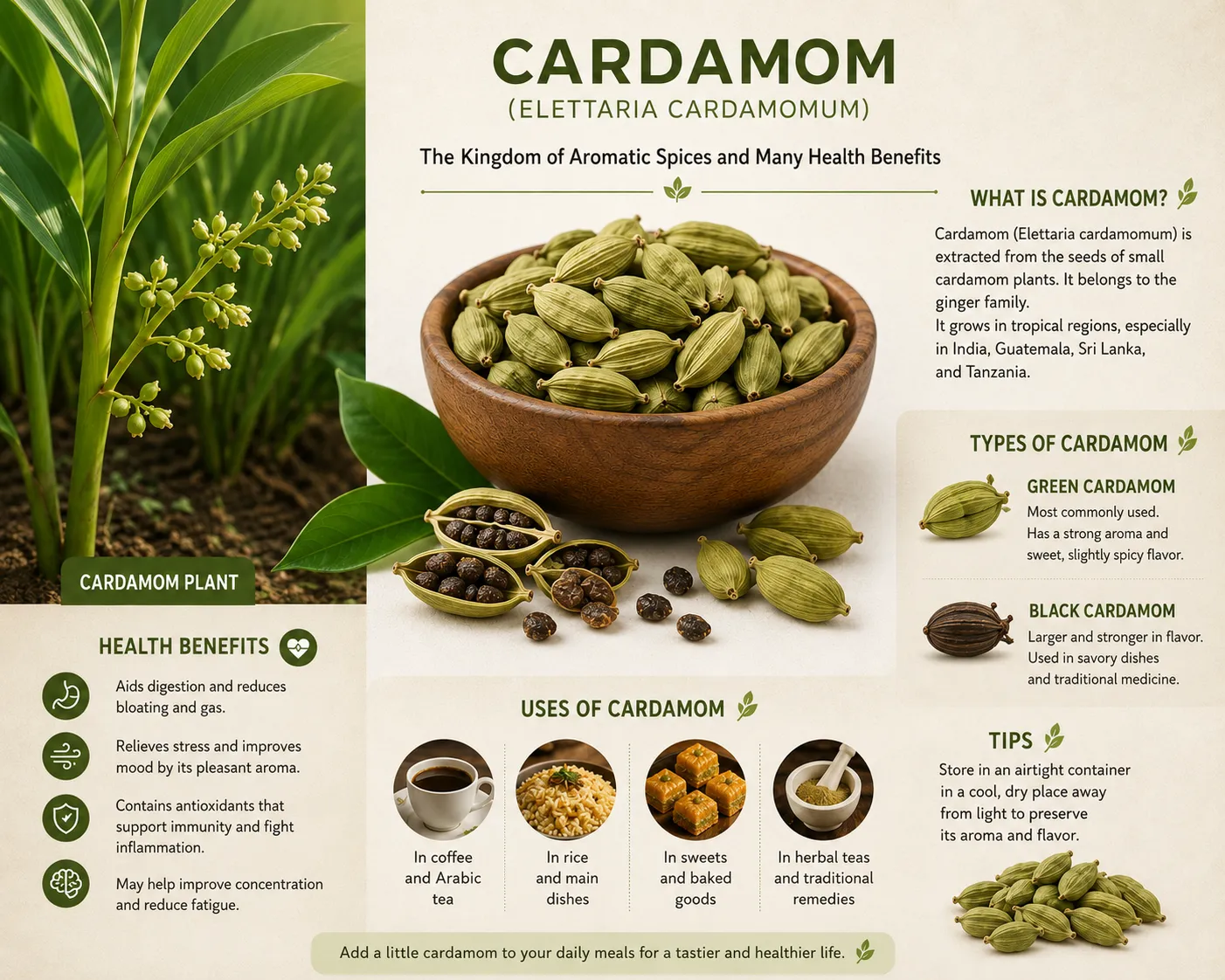
Cardamom belongs to the ginger family (Zingiberaceae), and its genus comprises two main types: green cardamom, also known as true cardamom (Elettaria cardamomum), and black cardamom (Amomum subulatum). These species differ in flavor, usage, and chemical composition. The green cardamom seeds, enclosed within their triangular pods, are tiny storehouses of volatile oil rich in phenolic and terpenoid compounds such as 1,8-cineole and terpinyl acetate. This oil is responsible for the sharp aromatic fragrance and the astonishing pharmacological effects we will detail in this article, from regulating blood pressure to combating depression.
Amid this wealth of information, debate often arises regarding the long-term safety of cardamom and its effects on specific populations such as pregnant women, diabetics, and cardiac patients. This precise scientific article addresses all these aspects with rigorous methodology; we review the benefits of cardamom supported by recent studies, and delve into its potential harms and contraindications. Because true knowledge is indivisible, we also provide a practical guide to growing cardamom at home and caring for it, along with explanations on distinguishing genuine pods from adulterated ones — a fascinating journey from the garden to the laboratory.
Scientific Definition: What Is the Difference Between Cardamom and Hill?
[DEV] زيارة محظورة — IP: ::1
In the Arab world, the question often arises: Is hill the same as cardamom? The direct answer is yes; they are two names for the same unique spice. The term "hal" or "hill" is the common name in the Gulf and Yemen, while "habb al-han" (cardamom) is used in Egypt and the Levant. However, from a scientific and commercial perspective, the real distinction extends to the different botanical species. Green cardamom (Elettaria cardamomum) is the true and most valuable type, characterized by light green pods and black seeds with a sweet, camphoraceous aroma. Black cardamom (Amomum subulatum), on the other hand, is a completely different species; its pods are larger, more wrinkled, and brown, and they undergo fire-drying that imparts a strong smoky flavor similar to camphor or eucalyptus.
The confusion arises because in traditional markets, the term "habb al-han" is sometimes used for the black variety, while "hill" is reserved for the green. Thus, when buying cardamom for a recipe requiring a delicate, sweet flavor (like Arabic coffee or desserts), one should choose green cardamom. If the dish is a complex savory one such as biryani or curry, black cardamom is the appropriate choice. The chemical composition explains this difference: green cardamom contains a higher proportion of terpinyl acetate (sweet note), while 1,8-cineole dominates in black cardamom (sharp, medicinal note).
How to Identify Real Cardamom and Distinguish It from Fake
[DEV] زيارة محظورة — IP: ::1
The spice trade is highly susceptible to adulteration, and cardamom is no exception. One can distinguish genuine pods from counterfeits through simple sensory tests. First, examine the pod's color: high-quality green cardamom should be bright green with a slight yellowish tinge; a pale or entirely yellow color indicates an old harvest with evaporated essential oils. For black cardamom, genuine pods are large, deeply wrinkled, and when crushed emit a strong smoky aroma. Second, open the pod and inspect the seeds: real seeds feel slightly sticky when pressed due to the essential oil, and are brownish-black to shiny black. If the seeds are dry, brittle, and dull, they are either old or adulterated.
Another reliable test is the flotation test: place some cardamom seeds in a glass of cold water. Fresh, high-quality seeds will usually sink to the bottom, while empty or de-oiled seeds float on the surface. At the laboratory level, gas chromatographic analysis of the essential oil clearly shows the ratio of 1,8-cineole to terpinyl acetate. Beware of pods coated with artificial green powder to appear fresh; rub the pod with a damp cloth — if a synthetic color transfers onto the cloth, it is definitive proof of fraud. Always purchase from reliable sources and keep the pods whole rather than ground powder, as the pod preserves the volatile oil from evaporation for a longer period.
Growing Cardamom at Home and Caring for It: See the Blossoms in Your Garden
[DEV] زيارة محظورة — IP: ::1
The cardamom tree, or more accurately the cardamom plant, is a perennial rhizomatous herb that grows to a height of two to four meters in its natural environment. To grow cardamom at home, you need to simulate tropical rainforest conditions: high humidity, moderate temperatures between 22 and 30 degrees Celsius, and filtered indirect light. Seeds are the best propagation method but require patience. Soak fresh cardamom seeds (from a reliable source, not roasted ones from your kitchen) in warm water for 24 hours, then sow them in a rich, well-draining organic potting mix. Cover the pot with a clear plastic bag to maintain high humidity, and place it in a warm, shaded spot. Germination takes 30 to 50 days.
Once seedlings appear, gradually transplant them into larger pots. Regular watering is essential without waterlogging the soil, as cardamom roots are susceptible to rot. Fertilize monthly with a balanced liquid organic fertilizer. The most important aspect of growing cardamom is patience: you will not see flowers until the second or third year of cultivation. But when they appear, they are a sight worth the wait — small white flowers clustered in racemes on short flowering stalks emerging from the base of the plant, interspersed with beautiful blue and purple streaks. After pollination, the famous green triangular pods form. They can be harvested when they begin to turn a light yellow, then dried in the shade.
Health Benefits of Cardamom: Unique Compounds with Multiple Mechanisms
[DEV] زيارة محظورة — IP: ::1
The numerous benefits of cardamom are attributed to its volatile oils and phenolic antioxidants. Laboratory analyses have shown that green cardamom contains over 30 biologically active compounds. 1,8-Cineole is the most abundant compound — the same active ingredient in eucalyptus oil — possessing anti-inflammatory, expectorant, and bronchodilatory properties. Other compounds like limonene and terpinene play a role in modulating the immune system and inhibiting abnormal cell growth. In this section, we review the most important benefits supported by precise mechanisms of action.
A Champion of Digestive Health and Carminative
Cardamom has been traditionally used after heavy meals to relieve bloating and indigestion. Modern science reveals that its mechanism goes beyond mere flavor sensation. Cardamom compounds relax smooth muscles in the intestinal wall by inhibiting calcium channels, which reduces painful spasms and allows trapped gas to pass smoothly. It also stimulates the secretion of bile from the gallbladder and pancreatic enzymes, accelerating the digestion of complex fats and reducing feelings of heaviness. A study published in the Journal of Ethnopharmacology in 2008 showed that green cardamom extract protects the gastric mucosa and reduces acid secretion, making it useful in preventing gastric ulcers associated with aspirin and NSAIDs.
For maximum benefit, chew 2-3 cardamom seeds immediately after a meal, or steep whole pods in boiling water for ten minutes and drink as warm tea. Heat releases the volatile oils and increases their effectiveness. Remember that grinding seeds just before use provides the highest concentration of active compounds compared to pre-ground powder, which loses much of its potency during storage.
Does Cardamom Treat Gingivitis? Science Answers
Yes, it can be confidently stated that cardamom has an important therapeutic and preventive role in oral and gum health. It is not limited to freshening breath but extends to combating the main pathogenic causes. A laboratory study published in the Archives of Oral Biology showed that cardamom essential oil inhibits the growth of Streptococcus mutans and Porphyromonas gingivalis, the primary culprits in tooth decay and periodontitis. Cineole and terpinene penetrate and destroy bacterial biofilms (plaque), reducing tartar formation and gum inflammation.
Moreover, chewing cardamom seeds stimulates saliva production, and saliva is the mouth’s first line of defense — it neutralizes acids and aids in the remineralization of tooth enamel. A natural mouthwash can be prepared by boiling 5 green cardamom pods in a cup of water, straining it, and using it twice daily. In a small clinical trial, a noticeable improvement in the gingival bleeding index was observed after two weeks of using cardamom mouthwash. However, cardamom does not replace brushing and flossing; it is a valuable complementary aid.
Cardamom Benefits for Nerves: From Soothing Stress to Enhancing Memory
Inhaling the aroma of cardamom in aromatherapy is associated with an immediate effect on the central nervous system. Volatile oil molecules travel through the olfactory nerve directly to the limbic system, the brain’s center for emotions and memory. This explains why inhaling cardamom steam or massaging the temples with diluted cardamom oil can relieve tension and anxiety within minutes. An animal study also indicated that cardamom extract increased levels of neurotransmitters such as serotonin and dopamine in the hippocampus, contributing to improved mood and enhanced short-term memory.
The benefits of cardamom for nerves also extend to neuropathic pain. In animal model experiments, cardamom demonstrated analgesic properties by inhibiting inflammatory pathways and modulating sodium channels responsible for transmitting pain signals. Therefore, it is recommended that individuals suffering from mental fatigue drink warm cardamom tea in the middle of the day, as it provides gentle alertness without the side effects of caffeine, especially when combined with green tea.
Cardamom Benefits for Women: Beyond Flavor
Women benefit from cardamom in multiple ways related to hormones and physiological processes. First, cardamom acts as a natural menstrual cycle regulator thanks to its antispasmodic properties. Drinking cardamom and ginger infusion before and during menstruation can relieve pelvic pain and uterine cramps. Second, preliminary studies have indicated that the flavonoids in cardamom may help balance estrogen levels, making it a supportive herb for menopausal women in alleviating hot flashes and mood swings, though broader human studies are still needed to confirm this.
Another important benefit is the use of cardamom in skincare. Mixing cardamom powder with honey as a face mask allows its antioxidants to combat free radicals responsible for wrinkles, while its antibacterial properties help cleanse pores and reduce acne. Moderation remains key, as topical application of pure cardamom oil may irritate sensitive skin; it should always be diluted with a carrier oil like sweet almond oil.
Is Cardamom Good for Diabetics? Mechanism of Glucose Control
Promising scientific research has shown that cardamom can be a helpful dietary addition for type 2 diabetes patients. Phenolic compounds, particularly quercetin and catechin found in cardamom, improve the sensitivity of insulin receptors in muscle and fat cells, allowing glucose to enter more efficiently and reducing insulin resistance. Cardamom also inhibits the alpha-amylase enzyme in the intestine — the enzyme responsible for breaking down starches into simple sugars — thereby slowing post-meal glucose absorption and preventing sharp spikes in blood sugar.
In a study published in the Iranian Journal of Pharmaceutical Research in 2017 on diabetic rats, administration of cardamom powder led to a significant reduction in fasting blood sugar and glycated hemoglobin (HbA1c) levels after 8 weeks. Although these results are promising, human responses may differ. Therefore, diabetic patients are advised to consult their physician before introducing concentrated cardamom supplements and should not consider them a substitute for prescribed medication or the recommended diet. A safe starting dose is a quarter teaspoon of cardamom powder daily with meals.
Chewing One Cardamom Pod Daily – What Happens to the Body?
[DEV] زيارة محظورة — IP: ::1
Imagine starting your day by chewing a single green cardamom pod. Over weeks, the body translates this small habit into tangible improvements. Benefits begin in the mouth, where levels of bacteria that cause bad breath decrease, and gums become less prone to bleeding. The effect then moves to the esophagus and stomach, where bowel movement improves and chronic bloating subsides. For individuals with mild hypertension, the diuretic effect and high potassium content help lower systolic blood pressure modestly but steadily over the long term.
The benefits do not stop there; with continued use, antioxidants accumulate in plasma, enhancing the body’s defenses against oxidative stress — a major factor in premature aging and chronic diseases. Some practitioners of Ayurvedic medicine describe taking a cardamom pod after lunch as a "daily shield" to protect the liver from food and environmental toxins. Note that this positive effect appears when cardamom is integrated into a healthy lifestyle, not as a magical charm. The safe maximum daily dose is 3-4 pods for a healthy adult, and should not be routinely exceeded without consulting a specialist.
Benefits of Chewing Cardamom Before Sleep: An Evening Ritual for Relaxation
[DEV] زيارة محظورة — IP: ::1
Cardamom’s benefits multiply when consumed before sleep, not only due to its compounds but also because of its association with a ritual that helps the brain prepare for rest. Gently chewing 2-3 cardamom seeds before going to bed helps calm the sympathetic nervous system and activate the parasympathetic system responsible for relaxation. The compound 1,8-cineole acts as a natural muscle relaxant, alleviating muscle tension accumulated during the day. Additionally, improving digestion before sleep prevents nocturnal acid reflux that causes insomnia for many.
Moreover, cardamom contains trace amounts of plant melatonin, the hormone that regulates the sleep cycle. While these amounts are not sufficient on their own to induce pharmacological drowsiness, they support the body’s natural circadian rhythm. Try chewing cardamom half an hour before bed, then drink a glass of lukewarm water, and you will notice an improvement in deep sleep quality after a week of adherence.
Cardamom with Cloves: A Powerful Botanical Synergy
[DEV] زيارة محظورة — IP: ::1
When the two spice giants, cardamom and cloves, come together, their antimicrobial and anti-inflammatory effectiveness multiplies. Cloves contain eugenol, a natural mild anesthetic and potent antiseptic, while cardamom provides the anti-inflammatory 1,8-cineole. Together, they form an ideal duo for treating sore throat and toothaches. A cardamom-clove tea can be prepared by boiling 3 cardamom pods and 2 cloves in a cup of water for ten minutes, then sweetening with honey. This drink soothes dry cough and expels phlegm more effectively than either alone.
This synergy extends to oral health; eugenol is already a component of most therapeutic toothpastes and mouthwashes, and when combined with cardamom oil, one obtains a superior homemade rinse that combats plaque and provides long-lasting freshness. This mixture is also used in traditional medicine to stimulate circulation and relieve joint pain when applied topically after dilution. Remember that clove oil is very strong, so using just one drop with three drops of cardamom oil in a teaspoon of carrier oil is sufficient.
Side Effects and Contraindications of Cardamom: When Medicine Turns to Poison
[DEV] زيارة محظورة — IP: ::1
Despite all the benefits, cardamom is not free from side effects, especially with incorrect use or overconsumption. High doses exceeding 6 pods per day regularly may cause opposite digestive disturbances: nausea, diarrhea, and heartburn, because concentrated volatile oils irritate the gastric lining when exceeding the limit. One group must exercise extreme caution: individuals with gallstones. Cardamom stimulates bile secretion and gallbladder contraction, which can dislodge stones and block the bile ducts, causing an acute pain attack requiring emergency medical intervention.
Cardamom also interacts with certain blood-thinning medications such as warfarin, as it increases bleeding time due to its antiplatelet effect. Combining them without medical supervision may expose the patient to the risk of internal bleeding. Therefore, anyone taking blood thinners or blood pressure medications should consult their physician before introducing cardamom into their daily diet in therapeutic amounts. Very high overdosing (which is rare) has been associated with rapid heartbeat and dry throat due to its diuretic effect.
Effect of Cardamom on Pregnant Women: A Delicate Balance Between Benefit and Risk
[DEV] زيارة محظورة — IP: ::1
Consuming cardamom in normal food amounts (one or two pods in cooking) is considered safe during pregnancy. In fact, it may benefit the pregnant woman by alleviating morning sickness and indigestion associated with the first months. However, warnings arise when it comes to concentrated doses, dietary supplements, or essential oil. There are insufficient studies confirming the safety of high therapeutic doses of cardamom during pregnancy. Herbal experts warn that large doses may stimulate uterine contractions, increasing the risk of spontaneous miscarriage in early months, or cause bleeding during pregnancy and after delivery due to its blood-thinning effect.
Therefore, the American College of Obstetricians and Gynecologists and specialized herbal medicine centers recommend that pregnant women limit cardamom use to food flavoring only, avoid drinking concentrated cardamom tea daily, and never ingest the essential oil. If there is a desire to inhale its steam to relieve congestion, it should be done cautiously and for a very short time. Safety first: always inform your follow-up doctor about any herbs or spices you consume regularly.
Case Study: Effect of Cardamom on a Type 2 Diabetes Patient
[DEV] زيارة محظورة — IP: ::1
Let us take a real-world example published in applied medical literature. Mr. M, a 55-year-old man diagnosed with type 2 diabetes for six years, taking metformin 1000 mg twice daily, with fasting blood sugar levels remaining between 140-160 mg/dL. He was proposed to add a teaspoon (about 3 grams) of green cardamom powder to his lunch daily, while monitoring his blood glucose before and after meals.
After 12 weeks, his results showed an average reduction in fasting sugar of 18 mg/dL, and a drop in postprandial sugar after two hours by 25 mg/dL. His HbA1c level also decreased from 7.9% to 7.3%. When asked, Mr. M reported improved digestion and less bloating. This case does not mean cardamom cured diabetes; rather, it added a modest improvement as a dietary adjuvant alongside drug therapy. This case confirms what studies say: cardamom improves insulin sensitivity and slows glucose absorption. But therapeutic decisions remain individual and in the hands of the physician.
Global Statistics: Where Is Cardamom Grown and Who Consumes It?
[DEV] زيارة محظورة — IP: ::1
According to the Food and Agriculture Organization (FAO), the global production of cardamom (green and black) reached about 35,000 tons annually in the last decade. Guatemala leads the producers with approximately 60% of world output, surpassing cardamom’s native India due to ideal climatic conditions and large agricultural investments. India ranks second with 25%, followed by Tanzania, Laos, and Sri Lanka. As for consumption, the Middle East and South Asia are the largest importers, as cardamom is heavily used in Arabic coffee and Indian and Pakistani cuisines.
The global cardamom spice market is valued at over 1.5 billion US dollars annually, and is expected to grow at a rate of 4% per year until 2030, driven by increasing demand for functional foods and herbal beverages. Statistics from poison control centers show that reports of cardamom poisoning are extremely rare, not exceeding a few dozen annually worldwide, all caused by ingesting pure essential oil in large doses or unmonitored drug interactions. This reinforces cardamom’s classification as one of the safest spices when used wisely.
Simulated Consultation: A Dialogue with a Nutritionist
[DEV] زيارة محظورة — IP: ::1
User: Doctor, I often hear that cardamom treats irritable bowel syndrome (IBS). Is that true?
Nutritionist: Good day. Cardamom does not "cure" IBS in the pharmacological sense, but it can be a wonderful aid to relieve symptoms. Its mechanism of relaxing intestinal muscles and reducing gas makes it very effective during bloating and cramping episodes. I recommend steeping 3 green cardamom pods in a cup of boiling water for a quarter of an hour, then straining the infusion and drinking it warm at the onset of discomfort. However, this should be part of a comprehensive plan that includes dietary modifications and identifying your personal IBS triggers.
User: I also noticed that pure cardamom oil is sold for perfumery; can I inhale it directly from the bottle to improve mood?
Nutritionist: Inhaling essential oil is indeed beneficial for mood enhancement, but I do not recommend inhaling directly from the bottle because the concentration is extremely high and may irritate the nasal mucous membranes. The safest method is to place 2-3 drops in an aroma diffuser with water, or put one drop on a tissue and inhale from a distance. Consult a specialist before any topical or internal use of essential oil, as some concentrated oils are toxic if swallowed.
Roadmap: Cardamom’s Journey from Tropical Forests to Modern Labs
[DEV] زيارة محظورة — IP: ::1
- 2000 BCE: Cardamom begins to be used in ancient Indian medicine for obesity and digestive issues.
- 4th century BCE: Cardamom reaches Greece via spice routes, used in royal perfumes and incense.
- 8th century CE: Arabs introduce cardamom to the Arabian Peninsula and invent the famous Arabic coffee blend.
- 19th century: Commercial cultivation of cardamom begins in Sri Lanka and then Guatemala.
- 1960-1980: Cardamom essential oil is isolated using commercial distillation techniques and used in pharmaceuticals and cosmetics.
- 2005-2010: Pivotal studies prove cardamom’s blood pressure-lowering and antioxidant effects.
- 2020-present: Advanced research using nanotechnology to encapsulate cardamom extract for enhanced bioavailability, and growing interest in its role in cancer prevention.
Priorities of Modern Scientific Research on Cardamom
[DEV] زيارة محظورة — IP: ::1
Today, scientists are focusing on several promising avenues. A first priority is to conduct rigorous human clinical trials to confirm cardamom’s effect on blood sugar and lipid control, since most evidence has been animal-based. A second priority is to explore the ability of cardamom compounds to cross the blood-brain barrier to treat neurodegenerative disorders such as Alzheimer’s. Finally, the development of nanopharmaceutical preparations from cardamom oil to enhance oral bioavailability is underway, as the volatile oil suffers from rapid evaporation and water insolubility.
On another front, agricultural engineers are working on developing cardamom strains that withstand climate change, because the cardamom crop is highly sensitive to elevated temperatures and drought. These research priorities outline a promising future for this golden spice.
Brainstorming: Innovative Ideas for Daily Cardamom Use
[DEV] زيارة محظورة — IP: ::1
• Add half a teaspoon of ground cardamom to pancake or waffle batter for an aromatic breakfast that boosts digestion.
• Steep green cardamom pods in olive oil for two weeks, then use this fragrant oil to dress salads and appetizers.
• Mix cardamom powder with coarse sea salt to create a natural body scrub that exfoliates dead skin cells and refreshes circulation.
• Add two cardamom pods to your daily water jug for a flavored water that helps eliminate toxins and encourages more drinking.
• Prepare "citrus-cardamom salt": mix lemon and orange zest with cardamom powder and coarse salt, then dry in the oven for a magical ingredient to season fish and chicken.
Risk Analysis: Safety Limits and Maximum Daily Doses
[DEV] زيارة محظورة — IP: ::1
To avoid side effects, it is essential to understand safety boundaries. For healthy adults, the safe daily dose is about 1.5 to 3 grams of dry cardamom powder, equivalent to 4 to 6 medium pods. This amount is sufficient to obtain health benefits without causing gastric irritation. For the essential oil, the safe therapeutic oral dose does not exceed 0.05 mL (one drop) per day, and it must be dissolved in honey or oil and never swallowed neat. Children under six should avoid therapeutic doses and be limited to the minute amounts in cooked food.
In the risk analysis for patients with chronic diseases, those with gallstones and those on anticoagulants top the list of those who should avoid high doses. People with chronic acid reflux are also advised to avoid chewing cardamom on an empty stomach, as the volatile oils may relax the esophageal sphincter and increase acidity. In short, cardamom is a friend to health in small doses, but like any biologically active substance, it has another face when overused.
Future Horizons: Cardamom in Personalized Medicine and the Pharmaceutical Industry
[DEV] زيارة محظورة — IP: ::1
Scientific research is moving toward what is called "personalized nutritional pharmacology," where dietary interventions are designed based on an individual’s genetic profile. A 2022 study showed that certain genetic variants in liver enzymes (CYP1A2) may affect the rate of 1,8-cineole metabolism, meaning some people benefit more from cardamom than others. This opens the door to customized therapeutic prescriptions containing cardamom. Some start-ups are also developing transdermal patches loaded with cardamom oil for the sustained treatment of chronic muscle pain.
In dentistry, cardamom and eugenol-infused dental floss is currently being developed to provide antibacterial protection between teeth where brushes cannot reach. These innovations herald a future where cardamom transforms from a mere kitchen spice into a staple component on home pharmacy shelves.
Frequently Asked Questions about Cardamom
[DEV] زيارة محظورة — IP: ::1
- Does cardamom raise blood pressure?
- On the contrary, cardamom helps lower high blood pressure thanks to its diuretic properties and high antioxidant content. However, those taking blood pressure medication should monitor their pressure to avoid a sudden drop.
- How many cardamom pods can I eat per day?
- For healthy adults, 3 to 4 pods per day is considered a safe and effective dose. It is not recommended to exceed 6 pods daily to avoid digestive disturbances.
- What is the best time to consume cardamom?
- After meals to improve digestion, and before sleep to enhance relaxation. Chewing one pod in the morning with a glass of water can also stimulate metabolism.
- Does cardamom cause constipation?
- No, cardamom is not a cause of constipation. Thanks to its dietary fiber content and stimulation of digestive secretions, it can help improve bowel regularity. Constipation may only occur in very rare cases of extreme overconsumption that leads to body dehydration due to excessive diuresis.
Trusted References and Sources
[DEV] زيارة محظورة — IP: ::1
- Blood pressure lowering, fibrinolysis enhancing and antioxidant activities of cardamom (Elettaria cardamomum). Indian J Biochem Biophys. 2009.
- Gastroprotective effect of cardamom, Elettaria cardamomum Maton. fruits in rats. J Ethnopharmacol. 2008.
- Cardamom extract as inhibitor of human platelet aggregation. Phytother Res. 2013.
- Antioxidant and antimicrobial activity of cardamom essential oil. Pharmaceutical Biology. 2009.
- FAOSTAT – Food and Agriculture Organization of the United Nations, production data for cardamom.
- Antidiabetic and hypolipidemic effects of cardamom in type 2 diabetic patients. Iranian J Pharm Res. 2017.