🔍 Introduction: Why Do We Lose Hair?
Hair loss, or baldness, is one of the most distressing concerns for both men and women, as its impact goes far beyond aesthetic appearance to affect self-confidence and psychological well‑being. Baldness usually begins gradually: a person may notice thinning at the front of the scalp or widening of the temporal recessions before it progresses to more obvious stages. Causes vary from genetics and hormonal changes to lifestyle factors, making the understanding of the root cause the first step towards choosing the right treatment.
Recent studies indicate that around 50% of men experience a noticeable degree of baldness by the age of fifty, while about 40% of women face visible hair thinning with advancing age. These high numbers explain the growing global interest in finding effective and safe solutions, which has driven medical research to make huge leaps in understanding the mechanism of hair loss and developing innovative therapies.
In this comprehensive guide, we will explore everything you need to know about baldness: from historical attempts at treating it across ancient civilisations, through what was mentioned in the Prophetic tradition, to the latest globally approved treatment protocols. We will discuss in detail hereditary baldness, frontal baldness, female hair loss, as well as natural, herbal, and garlic-based remedies, with a rigorous scientific evaluation of each method.
The aim of this guide is to empower you to make an informed decision based on documented information, far from commercial claims or common myths. We will rely on peer‑reviewed scientific references and real‑world case studies to give you a clear picture of every treatment option, its risks, and its expected outcomes.
Whether you are at the beginning of your hair‑loss journey or searching for advanced solutions for advanced hereditary baldness, this article will provide you with a complete roadmap to guide you step by step towards regaining your hair and your confidence.
📜 The History of Hair Loss Treatments Through the Ages
Attempts to treat baldness date back thousands of years. Ancient Egyptian papyri, dating to 1550 BCE, reveal medical prescriptions that used a mixture of lion fat, hippopotamus fat, crocodile fat, and castor oil to massage the scalp, believing that the strength of these animals would transfer to the hair. They also used herbs such as fenugreek and castor seeds in poultices applied to balding areas.
In ancient Greece, Hippocrates – who was himself bald – prescribed bizarre remedies including pigeon droppings, horseradish, and radishes mixed with various spices. Ironically, Hippocrates observed that eunuchs did not become bald, a brilliant observation that paved the way, many centuries later, for understanding the role of male hormones in hair loss. The Greeks also used olive oil and castor oil to stimulate hair growth.
In ancient China, physicians relied on acupuncture and medicinal herbs such as ginseng, licorice root, and Chinese madder, believing that hair loss was linked to an imbalance of energy in the kidneys and blood. This therapeutic philosophy persisted for centuries and continues to influence traditional East Asian medicine today.
During the Middle Ages in Europe, strange recipes spread, including dog urine, horse dung, and burnt onion, while the nobility turned to wearing wigs as a cosmetic solution that hid the problem without treating it. In the Islamic world, physicians such as Ibn Sina (Avicenna) and Al‑Razi documented advanced plant‑based treatments to stimulate hair regrowth.
The real turning point came in the twentieth century with the accidental discovery of minoxidil in 1970, when doctors noticed excessive hair growth as a side effect in blood‑pressure patients using it. This was followed by the discovery of finasteride in the 1990s, which targeted the mechanism that converts testosterone into dihydrotestosterone (DHT), the hormone responsible for hereditary baldness.
Today, hair transplantation using Follicular Unit Extraction (FUE) and Follicular Unit Transplantation (FUT) has become one of the most common cosmetic procedures worldwide, alongside advanced therapies such as Platelet‑Rich Plasma (PRP), low‑level laser therapy, and stem cell treatments, heralding a promising future for eliminating baldness.
🧬 The Scientific Causes of Baldness
Baldness occurs when the natural hair growth cycle is disrupted. This cycle consists of three main phases: the growth phase (Anagen), lasting from two to seven years; the regression phase (Catagen), lasting a few weeks; and the resting phase (Telogen), which lasts about three months before the hair falls out. Under normal conditions, about 90% of scalp hair is in the growth phase at any given time.
The most common cause of baldness is hereditary or androgenetic alopecia, where genes inherited from one or both parents play a pivotal role in increasing the sensitivity of hair follicles to dihydrotestosterone (DHT). This hormone, derived from testosterone, binds to receptors in the hair follicles and causes them to shrink gradually until they can no longer produce visible hair.
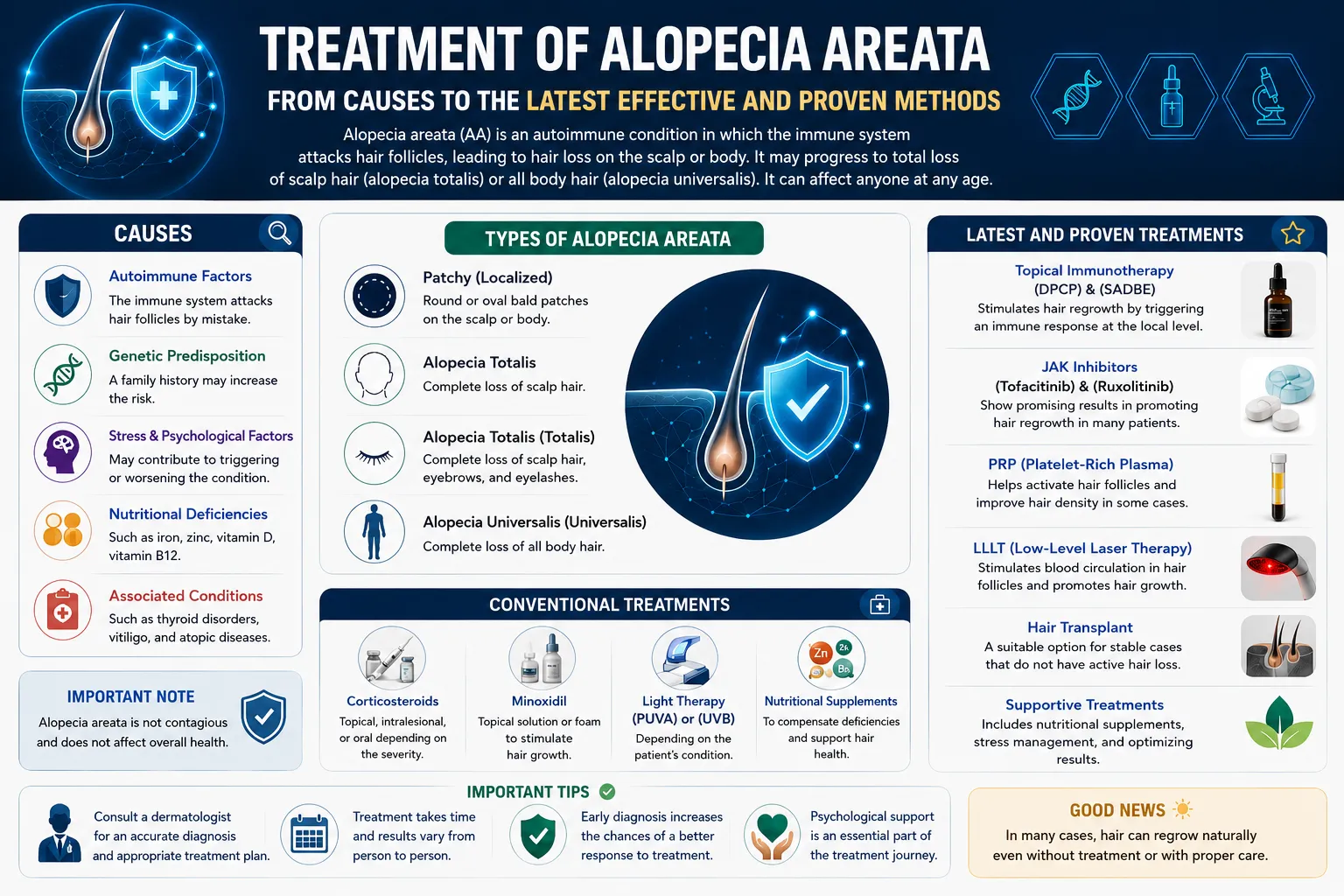
Additional factors can exacerbate or accelerate hair loss, including chronic stress that raises cortisol levels and affects the hair growth cycle, nutritional deficiencies – particularly iron, zinc, vitamin D, and biotin – and thyroid disorders that impact the metabolism of hair follicles. Autoimmune diseases such as alopecia areata play a different role, where the immune system directly attacks the follicles.
It is important to distinguish between different types of hair loss, as the treatment for hereditary baldness is completely different from the treatment of telogen effluvium, which typically occurs after stress, illness, or childbirth and is temporary in most cases. Likewise, scarring alopecia, which permanently destroys follicles, differs from non‑scarring alopecia where follicles remain alive and can be rescued with appropriate treatment.
🕌 What Did the Prophet Say About Baldness?
The noble Prophetic Sunnah contains hadiths that indicate the Prophet Muhammad’s ﷺ care for his hair and beard, and his general guidance on seeking medical treatment. It is important to clarify that there is no specific prophetic hadith that describes a particular cure for hereditary baldness as we understand it today; however, the general principles laid down by Islam that encourage seeking treatment and looking after one’s health fully apply to the problem of hair loss.
The famous hadith narrated by Abu Hurayrah, may Allah be pleased with him, in which the Prophet ﷺ said: “Allah has not sent down any disease without sending down a cure for it” (Narrated by Al‑Bukhari), is a strong foundation that encourages searching for a remedy for every ailment, including baldness. Likewise, the Prophet’s ﷺ guidance on using black seed, where he said: “Indeed, this black seed is a cure for every disease except death” (Narrated by Al‑Bukhari and Muslim), has led many to try black seed oil for treating hair loss.
It is narrated in Sunan Abi Dawud and At‑Tirmidhi that the Prophet ﷺ took care of his hair, oiled it, and combed it, and he said: “Whoever has hair, let him honor it.” This hadith urges caring for the hair and preserving it, which aligns with modern medical recommendations that stress the importance of scalp care in preventing hair loss.
The Prophet ﷺ also used henna to dye his hair, which points to the importance of appearance and hair care. In modern times, some scientific studies have shown potential benefits of black seed oil, olive oil, and certain herbs mentioned in Prophetic medicine in promoting scalp health and improving hair growth, confirming the harmony between prophetic guidance and modern scientific discoveries.
💡 Brainstorm: The Treatment Options Map
Before diving into details, let us survey the full landscape of hair loss treatment options available in 2026. Imagine standing before a large board that holds all possible solutions, categorized by their mechanism of action and degree of intervention. The goal of this brainstorm is to draw a comprehensive mental map that helps you understand where each treatment lies within the wide spectrum of options.
🔴 Category One – Topical Treatments: Includes minoxidil in 2% and 5% concentrations as a solution or foam, topical caffeine preparations, copper peptides, topical retinoids, and herbal extracts such as saw palmetto and rosemary oil. These treatments are applied directly to the scalp and are characterized by ease of use and low systemic risk.
🟡 Category Two – Oral Treatments: Includes finasteride 1 mg (Propecia) specifically approved for hair loss, dutasteride (Avodart) which is more potent but not officially approved for baldness in some countries, spironolactone for women, and dietary supplements such as biotin, zinc, vitamin D, and iron. These treatments work from within the body and target hormonal or nutritional causes.
🟢 Category Three – Procedural Treatments: Includes Platelet‑Rich Plasma (PRP) where the patient’s blood is drawn and platelets are concentrated and then injected into the scalp, mesotherapy which injects a mixture of vitamins and growth factors, and microneedling which stimulates the natural regeneration of follicles by creating controlled micro‑injuries. These procedures require repeated visits to the doctor.
🔵 Category Four – Technological Treatments: Such as Low‑Level Laser Therapy (LLLT) available in clinics or as home devices (helmets and laser combs), stem cell therapy which is still in the research and development stage, and Intense Pulsed Light (IPL). These technologies rely on photonic energy or cellular renewal to stimulate follicles.
🟣 Category Five – Surgical Solutions: Led by hair transplantation using FUE and FUT techniques, which offer permanent solutions by moving healthy follicles from the donor area (back and sides of the head) to balding areas. These techniques have evolved dramatically and now produce very natural results.
💊 The Best Modern Methods for Treating Baldness: A Comprehensive Comparison
Experts now agree that the best results are achieved by combining multiple treatments (Combination Therapy) that target different mechanisms of hair loss. The golden therapeutic protocol adopted in major hair clinics globally consists of three axes: slowing down loss using DHT inhibitors, stimulating growth using topical vasodilators, and enhancing follicle health through nutrition and biological factors.
Below is a precise comparison of the most prominent approved modern treatments, indicating the mechanism of action, the expected time to see results, and the approximate efficacy rate based on clinical studies published in peer‑reviewed medical journals. It is essential to consult a dermatologist specializing in hair before starting any treatment, because an accurate diagnosis of the type and stage of baldness determines the most appropriate protocol.
1. Topical Minoxidil: A vasodilator that increases blood flow to the follicles and prolongs the growth phase. Available over the counter in 2% and 5% concentrations, used twice daily. Initial results appear after 3 to 6 months, and the response rate reaches about 60‑70% of users. Illustrative example: If a person starts using it today, they should expect to see vellus hair (fine hair) after about 8 weeks, and denser hair after 4 to 6 months.
2. Oral Finasteride: An inhibitor of the type II 5‑alpha reductase enzyme, lowering DHT levels in the scalp by up to 60%. Taken as a 1 mg daily dose by prescription. A 5‑year study showed that 90% of men maintained or increased their hair density. It is important to note that sexual side effects are rare but possible (about 1‑2% of users).
3. Platelet‑Rich Plasma (PRP): A procedure in which 10‑20 ml of the patient’s blood is drawn, centrifuged to separate platelet‑rich plasma, and then injected into the scalp. This plasma contains growth factors that stimulate dormant follicles. An initial 3‑4 sessions at monthly intervals are recommended, followed by maintenance sessions every 6‑12 months. Example: A patient with stage III baldness may need 4 PRP sessions combined with minoxidil to notice a tangible improvement.
4. Hair Transplantation: The only surgical solution that provides permanent results. In the FUE technique, individual follicles are extracted from the donor area and implanted into the bald areas. The procedure takes 6‑8 hours, and final results appear after 12‑18 months. The cost ranges between $3,000 and $15,000 depending on the number of grafts and the country.
🧪 Hereditary Hair Loss: Causes and Most Effective Approaches
Hereditary or androgenetic alopecia is the most common type, affecting about 80% of men and 50% of women at some stage of their lives. It results from an excessive sensitivity of the hair follicles to the hormone DHT, and this sensitivity is genetically inherited. The important thing to understand is that the problem is not a high level of the hormone itself, but the exaggerated response of the follicles to it, which explains why some people suffer from severe baldness while others with the same hormonal levels do not.
What is the best treatment for hereditary baldness? The answer depends on the stage of baldness when treatment begins. In the early stages (1‑3 on the Norwood scale), combining oral finasteride and topical minoxidil is the first‑line option recommended in global guidelines. This combination targets the root cause: finasteride reduces DHT production, and minoxidil stimulates the affected follicles to produce new hair.
In moderate to advanced stages (4‑7 on the Norwood scale), medications alone may not be sufficient to fully restore lost hair. Here, hair transplantation becomes the optimal choice, often supplemented with ongoing drug therapy to protect the transplanted hair and the remaining original hair from the effects of DHT. Continuity of drug therapy is essential because stopping it will lead to the resumption of the loss process.
Proven hereditary baldness treatment: The experience of thousands of patients and clinical trials confirm that the best proven protocol for hereditary baldness consists of: finasteride 1 mg daily (or dutasteride 0.5 mg daily for more resistant cases), with minoxidil 5% twice daily, with a PRP session every 4‑6 months, and using a shampoo containing ketoconazole 2% twice a week. This integrated protocol has achieved positive results in about 85% of patients who adhered to it for at least a full year.
👨 Frontal Baldness Treatment in Men
Frontal baldness, which manifests as a receding hairline and recession at the temporal corners (the so‑called M‑shape), is one of the most worrying forms of hair loss because it alters facial shape and is difficult to hide. The specific problem with frontal baldness is that the follicles in this area are usually the most sensitive to DHT, making them the first areas affected by hereditary baldness and the last to respond to drug treatments.
The challenge in treating frontal baldness lies in the relatively poorer blood supply in this area compared to the crown (top of the head), which makes the frontal region less responsive to minoxidil than the crown in many cases. However, starting treatment early, as soon as the first signs of recession are noticed, yields the best results and halts progression before it is too late.
The recommended protocol for frontal baldness includes: daily finasteride to stop the effect of DHT on the sensitive frontal follicles, with minoxidil 5% applied topically to the frontal hairline twice daily with massage to stimulate circulation, in addition to microneedling sessions (Dermaroller 1‑1.5 mm) once a week to stimulate growth factors and follicle regeneration. Studies have shown that adding microneedling doubles the effectiveness of minoxidil in the frontal area.
In cases that do not respond sufficiently to medications, frontal hair transplantation is the most effective solution for rebuilding a natural hairline. The skilled surgeon needs to design a hairline that suits the patient’s age and facial features, taking into account the natural hair growth angles to avoid an artificial look. Typically, 1,500‑3,000 grafts are transplanted in the frontal area depending on the degree of baldness.
👩 Hair Loss Treatment for Women
The pattern of hair loss in women differs significantly from that in men. It is characterized by diffuse thinning over the top of the scalp while generally preserving the frontal hairline, a pattern known as Female Pattern Hair Loss (FPHL). The main challenge in diagnosing female hair loss is the multiplicity of its potential causes, requiring a comprehensive evaluation that includes medical history, hormonal tests, and blood work.
Common causes of hair loss in women include: Polycystic Ovary Syndrome (PCOS) which raises androgen levels, thyroid disorders especially hypothyroidism, chronic iron deficiency (anemia) that deprives follicles of needed oxygen, post‑pregnancy and postpartum hormonal changes, and the perimenopausal phase where protective estrogen declines.
Approved treatments for women: Topical minoxidil 2% is the first and only FDA‑approved treatment specifically for female pattern hair loss, with the possibility of using the 5% concentration under medical supervision in more severe cases. Finasteride is not prescribed to women of childbearing age due to its risk to the fetus, whereas spironolactone (a potassium‑sparing diuretic and anti‑androgen) at doses of 100‑200 mg daily can be used for women who have elevated androgens.
In addition to medications, dietary supplements play an important role in treating female hair loss, especially when a deficiency is confirmed by tests. Iron in therapeutic doses (with vitamin C to improve absorption) for women with anemia, biotin 5,000‑10,000 micrograms daily, vitamin D3, and zinc. The treatment duration is not less than 6 months to evaluate response, and it is crucial to treat the underlying cause (such as PCOS) in parallel with hair loss therapy.
🌿 Natural Baldness Treatment for Men
Attention is increasingly turning towards natural treatments as a lower‑cost and safer alternative to chemical drugs, especially in the early stages of baldness. The main advantage of natural treatments is the rarity of their side effects and their ability to improve the overall health of the scalp and hair. However, one must be realistic: natural treatments alone are rarely sufficient to treat advanced hereditary baldness, and it is better to use them as complementary aids alongside approved medical treatments.
Rosemary Oil: In a study published in 2015 in the journal Skinmed, researchers compared rosemary oil with minoxidil 2% over 6 months, and the result was remarkable: rosemary oil showed similar effectiveness to minoxidil in improving hair growth, with less scalp itching as a side effect. It is recommended to dilute 3‑5 drops of rosemary essential oil in a tablespoon of a carrier oil (like coconut oil or jojoba oil) and massage the scalp daily.
Black Seed Oil (Nigella Sativa): Black seed oil possesses anti‑inflammatory, antioxidant, and immune‑strengthening properties. It contains the compound thymoquinone, which has shown in laboratory studies the ability to stimulate hair growth by inhibiting inflammation in the follicles. Mix equal parts of black seed oil and olive oil and massage the scalp for 5 minutes, 3 times a week.
Peppermint Oil: A Korean study published in 2014 showed that peppermint essential oil significantly increased the number of follicles, their depth, and the thickness of the dermal layer in laboratory animals after only 4 weeks. Peppermint oil works by increasing blood flow to the scalp and providing a refreshing sensation that stimulates follicles. Mix 3% peppermint oil with a carrier oil and massage gently.
Onion Juice: Rich in sulfur, which is a building block of keratin (the main hair protein). A Jordanian study published in the Journal of Dermatology in 2002 showed that applying raw onion juice to the scalp led to hair regrowth in 86.9% of participants after 6 weeks, compared with only 13% in the control group that used tap water.
🌱 Treating Baldness with Herbs
Natural herbs possess an arsenal of biologically active compounds that can contribute to combating baldness through multiple mechanisms. Some of these herbs have proven effective in clinical studies, while others rely on long traditional use. The important thing is to know the appropriate doses and correct methods of use to avoid any potential negative effects.
Saw Palmetto: This herb, extracted from the berries of a small palm tree native to North America, is considered one of the most powerful natural herbs that inhibit the conversion of testosterone to DHT, making it the closest natural alternative to finasteride. A study conducted on 100 men who used a supplement containing 320 mg of saw palmetto extract daily showed an improvement in hair density in 60% of them after 6 months. It is usually taken at a dose of 320 mg daily divided into two doses.
Nettle Root: The root of the stinging nettle plant contains lignan compounds that bind to sex hormone‑binding globulin (SHBG), reducing the amount of free DHT in the blood. It is usually used in combination with saw palmetto to enhance the DHT‑blocking effect. The typical dose: 300‑600 mg of dried extract daily.
Korean Ginseng (Panax Ginseng): One of the most famous herbs in traditional Chinese medicine for treating hair loss. It contains ginsenosides that stimulate microcirculation in the scalp and enhance the proliferation of follicle cells. It can be used topically (ginseng oil) or orally (capsules). A laboratory study showed that ginsenosides protect hair follicles from damage caused by oxidative stress.
Fenugreek: Fenugreek seeds are rich in proteins, nicotinic acid, and lecithin, all essential for hair growth. Soak two tablespoons of fenugreek seeds in water overnight, then grind to obtain a paste that is applied to the scalp for an hour before washing. Fenugreek infusion can also be drunk or taken as a dietary supplement.
🧄 Treating Baldness with Garlic: The Scientific Truth
Garlic is considered one of the most potent and controversial home remedies in the field of hair loss treatment. Garlic contains allicin, a sulfur‑rich compound, which is the same basic element that builds keratin (the hair protein). Garlic also has strong antibacterial and antifungal properties, making it particularly useful when hair loss is associated with scalp inflammation or stubborn dandruff.
How does garlic stimulate hair growth? The proposed mechanism includes: improving blood circulation in the scalp by dilating micro‑vessels (an effect similar to minoxidil but weaker), providing the organic sulfur necessary for keratin building, fighting microbes that may weaken follicles, and reducing inflammation that contributes to hair loss. Some laboratory studies on human skin cells have shown that garlic extract stimulates the proliferation of keratinocyte cells in the follicles.
Correct method of use: Crush 3‑4 cloves of fresh garlic and extract their juice, then mix with two tablespoons of coconut oil or olive oil to dilute the garlic concentration and prevent skin irritation. Massage the mixture gently into the affected areas for 5‑7 minutes, leave for an additional 30‑45 minutes, then wash thoroughly with a mild shampoo. Repeat this treatment two to three times a week.
Important warnings: Concentrated raw garlic may cause chemical burns on the scalp if left for too long or used undiluted. Always perform a patch test on a small area of skin before full application. Garlic should not be used on a scalp with cuts or scratches. Also, the strong garlic odor can be bothersome to some, so it is preferable to use it at night before sleeping.
🏆 Curing Baldness Permanently: Is It Possible?
The question that preoccupies everyone suffering from baldness: Can baldness be cured permanently? The precise scientific answer requires an important clarification: the word “permanently” means complete healing without the need for ongoing treatment, and this is not currently possible for hereditary baldness for reasons we will explain. The genetic predisposition to baldness exists in a person’s DNA and cannot be erased, meaning that stopping DHT‑inhibiting treatments will inevitably lead to the resumption of the hair loss process.
Nevertheless, it can be said that hair transplantation offers a “semi‑permanent” solution from a cosmetic perspective, since the follicles transplanted from the donor area (back and sides) are genetically resistant to the effects of DHT, and thus continue to grow naturally and permanently in their new location. A person who has had a successful hair transplant will retain the transplanted hair for life, but they may need ongoing drug therapy to protect the remaining original hair in other areas.
A realistic approach: Instead of seeking a non‑existent “permanent cure”, experts advise adopting a “sustainable management” model for baldness, much like managing other chronic diseases such as high blood pressure or diabetes. This means using the available treatments regularly to maintain the achieved results, while adjusting the therapeutic protocol as the condition develops over time.
Ongoing research into hair follicle cloning technologies, stem cells, and gene therapy promises the possibility of achieving a more radical cure in the future, but these technologies are still in the experimental stages and may need an additional 5‑10 years before they become widely commercially available.
⭐ Treatment Priorities by Type and Stage of Hair Loss
To simplify the decision‑making process, we have classified treatment options by priority based on the type and stage of baldness. This classification is based on the guidelines issued by the American Academy of Dermatology (AAD) and the International Society of Hair Restoration Surgery (ISHRS), and aims to help you determine the most appropriate starting point for your condition.
🥇 First Priority – Early Hereditary Baldness (Stage 1‑3): Combine oral finasteride 1 mg + topical minoxidil 5% + ketoconazole shampoo. This combination is the most cost‑effective for the outcome, and should be started upon diagnosis to preserve as much original hair as possible.
🥈 Second Priority – Moderate Hereditary Baldness (Stage 3‑5): The above medications + quarterly PRP sessions + microneedling. If the frontal hairline does not improve after one year, the need for hair transplantation is assessed.
🥉 Third Priority – Advanced Baldness (Stage 6‑7): Hair transplantation is the main option here, preceded by 6‑12 months of drug therapy to stabilize the loss and improve the quality of donor follicles. After transplantation, the patient continues on finasteride to protect the non‑transplanted areas.
🏅 Fourth Priority – Female Hair Loss: Minoxidil 2% or 5% + iron supplements if ferritin is below 70 ng/mL + spironolactone if there are signs of hyperandrogenism. Treating the underlying cause (thyroid, PCOS) takes absolute priority.
⚠️ Risks and Side Effects of Treatments: A Frank Assessment
No effective treatment is without potential risks, and transparency about these risks is essential for an informed decision. Here we review the scientifically documented side effects of the most popular treatments, along with their incidence rates derived from clinical trials. Important note: most side effects are rare and reversible upon stopping the medication, but the patient must be aware of them in advance.
Finasteride: Decreased libido (1.8% of users), erectile dysfunction (1.3%), reduced semen volume (1%). These effects usually resolve within weeks of discontinuation. The “post‑finasteride syndrome” (PFS) is medically controversial, as large studies have not confirmed it as a condition independent of the depression and anxiety that often accompany baldness itself. Baseline mood should be evaluated before prescribing the drug.
Minoxidil: Scalp irritation and itching (about 7%), unwanted hair growth on the face or forehead if the solution touches these areas, temporary shedding in the first weeks (shedding phase) which is a positive sign of follicle response. Rarely causes hypotension or palpitations when used in excessive doses or on broken skin.
Hair Transplantation: Standard surgical risks such as bleeding and infection (less than 1% in accredited clinics), small scars in the donor area (less visible with FUE), temporary shock loss of original hair adjacent to the transplanted area, and in very rare cases: abnormal hair growth or incorrect placement of follicles if the surgeon is inexperienced.
🗺️ Therapeutic Roadmap: Step by Step
We present here a structured therapeutic pathway that can be adapted to your individual condition. This roadmap was designed by dermatologists specialized in hair loss, and represents a gradual approach starting with the least costly and least invasive measures and escalating according to response.
🗓️ Month 0 – Diagnosis: Visit a dermatologist specialized in hair to perform a clinical examination using a dermatoscope, assess the stage of baldness on the Norwood scale (for men) or Ludwig scale (for women), and request blood tests including: iron and ferritin, zinc, vitamin D, thyroid hormones (TSH, T3, T4), and for women: androgen assessment (DHEA‑S, free testosterone) to rule out PCOS.
🗓️ Month 0‑3 – Start of Treatment: Prescription for finasteride (if appropriate) and purchase of minoxidil 5% from the pharmacy. Photograph the scalp to document the starting point. Begin using ketoconazole 2% shampoo twice a week. During this period, temporary “shedding” may occur, which is normal and a positive indicator.
🗓️ Month 3‑6 – Initial Assessment: Second visit to the doctor to evaluate response. If the response is weak, PRP sessions or microneedling can be added. Adjust dosages if necessary. Continue the basic treatment regimen.
🗓️ Month 6‑12 – Comprehensive Assessment: Compare the documented photos to determine the degree of improvement. At this stage, about 80% of responders notice a tangible improvement. If the frontal baldness has not responded adequately, the option of hair transplantation is discussed as the next step.
📋 A Real‑World Case Study
File: A 34‑year‑old man visited a dermatology clinic complaining of a receding frontal hairline and noticeable thinning in the crown area over the past 3 years. Family history: his father and maternal uncles had hereditary baldness (stage 5‑6). Clinical examination: male pattern baldness stage 3 on the Norwood scale, with fine vellus hair present in the affected areas, indicating that the follicles were still alive.
Applied therapeutic protocol: The patient was prescribed finasteride 1 mg daily in the morning, minoxidil 5% foam twice daily on the frontal and crown areas, with massage for two minutes. Ketoconazole 2% shampoo was added twice a week. Four PRP sessions were performed, four weeks apart. The patient was also advised to take a dietary supplement containing biotin, zinc, and vitamin D.
Results after 12 months: Comparison photos showed a marked improvement: an estimated 40% increase in hair density in the crown area, stabilization of the frontal hairline, and the appearance of new vellus hair that gradually turned into terminal hair. The patient reported high satisfaction with the results, with no notable side effects. He continued on finasteride and minoxidil as long‑term maintenance therapy.
Lessons learned from this case: Early initiation of treatment before complete follicle loss was a decisive factor in its success. The presence of vellus hair was a positive indicator of the follicles’ ability to respond. Combining treatments with different mechanisms (DHT inhibition + growth stimulation + growth factors from PRP) gave better results than any single treatment could have achieved alone.
🎭 Roleplay: A Dermatologist Consultation
Setting: An examination room in a dermatology clinic. The patient (Ahmed, 28 years old) sits in front of a dermatologist specialized in hair.
Ahmed: Doctor, about a year ago I noticed my hair starting to thin at the front, and my friend told me that my father’s baldness will inevitably hit me. Can hair come back after baldness?
Doctor: That is a very important question, Ahmed. Let me clarify: hair that you have completely lost (follicles that have died and turned into scar tissue) cannot come back. But the good news is that most of the “lost” hair in the early and moderate stages is not actually gone; it is in a dormant state and can be reactivated. This is the goal of our treatment: to rescue dormant follicles before they die permanently.
Ahmed: And what is the best way to treat hereditary baldness? I’ve heard of minoxidil and finasteride, but I’m worried about side effects.
Doctor: Based on my examination of your scalp, you are at stage two of hereditary baldness, which means your frontal follicles are still alive and salvageable. The best protocol for you right now is minoxidil 5% topically in the morning and evening, with finasteride 1 mg daily. Side effects of finasteride occur in less than 2% of users and are reversible upon stopping. I will order some lab tests first to ensure there are no contraindications.
Ahmed: And is there an effective natural treatment? I would prefer to avoid chemical drugs if possible.
Doctor: I understand your preference. We can try rosemary oil with microneedling for 6 months and evaluate the results. But you must be honest with yourself: natural treatments alone yield slower and inferior results compared to approved medications. The best option is to combine them. How about we start with minoxidil and rosemary oil and follow up every 3 months?
Ahmed: That sounds reasonable. And will I need a hair transplant in the future?
Doctor: If you adhere to the treatment and we start early enough, there is a good chance you may never need a hair transplant, or at least delay it for many years. But remember: treatment requires patience. Results begin to appear after 3‑6 months, and full growth may take a year. The important thing is to start now and not delay further.
📊 Hair Loss Statistics
The following numbers and statistics are drawn from large‑scale epidemiological studies and reports from international medical organizations, painting a clear picture of the scale of the hair loss problem and the outcomes of available treatments. We present these figures to serve as a realistic reference, far from marketing exaggerations.
▪️ 50% of Caucasian men reach stage IV or higher baldness by the age of 50. ▪️ 25% of men begin to show signs of hereditary baldness before the age of 21. ▪️ 40% of women experience noticeable hair thinning after menopause. ▪️ 85‑90% of men using finasteride maintained or increased their hair density in a 5‑year study (Japanese study, 2019).
▪️ 60‑70% of topical minoxidil users notice an improvement in hair density after 6‑12 months. ▪️ 86.9% of participants in the onion juice study showed hair regrowth compared to 13% in the placebo group. ▪️ Over 700,000 hair transplant procedures were performed globally in 2023 according to the ISHRS. ▪️ 95% graft survival rate in FUE technique when performed by certified surgeons.
▪️ $2.5 billion global hair loss treatment market size in 2025, with projections reaching $4.5 billion by 2032. ▪️ 6 out of 10 men reported that baldness negatively affected their self‑esteem in a survey by the British Association of Dermatologists.
❓ Frequently Asked Questions
- How can you treat baldness quickly?
- There is no “quick” cure for baldness in the literal sense, because the hair growth cycle takes months. The fastest noticeable improvement is achieved by combining topical minoxidil, oral finasteride, and PRP sessions, where improvement begins to appear within 3‑4 months. Any product promising results in weeks is scientifically misleading. Patience and consistency are the keys.
- Can hair come back after baldness?
- Yes, hair can come back after baldness provided that the hair follicles are still alive. Follicles that have entered a dormant phase and have not yet reached the fibrosis and complete death stage can be reactivated with appropriate medications. Examination with a dermatoscope is the best way to assess follicle viability. If fine vellus hair is visible, this is a positive sign.
- Can I regrow hair after balding?
- Regrowing hair after balding is possible in areas that have not reached the stage of scarring alopecia (complete destruction of follicles). This can be achieved using growth stimulants such as minoxidil, microneedling, and PRP. In areas that have become completely smooth without any vellus hair, hair transplantation is the only option for regrowth.
- What is the best treatment for hereditary baldness?
- The best treatment for hereditary baldness is the integrated approach that combines: a DHT inhibitor (finasteride or dutasteride) to stop the loss, a topical growth stimulant (minoxidil) to activate follicles, and growth factors (PRP or microneedling) to enhance regeneration. This combination achieves the best results in clinical studies. Monotherapy is rarely sufficient for moderate and advanced cases.
- What did the Prophet say specifically about baldness?
- There is no specific prophetic hadith that mentions baldness by name or prescribes a specific treatment for it. However, general hadiths about seeking medical treatment, such as “Seek treatment, for Allah has not sent down a disease without sending down a cure for it,” encompass baldness among the ailments for which it is permissible and recommended to seek treatment. Hadiths about black seed, olive oil, and honey fall under general health guidance that may be beneficial in supporting hair health.
- Is treating baldness with garlic safe and effective?
- Garlic can be useful as an adjunctive treatment, especially because of its sulfur content and antimicrobial properties, but it is not a substitute for approved medical treatments for hereditary baldness. The most important thing is to dilute it well with a carrier oil to avoid chemical burns, and not to use it on broken skin. Its effectiveness focuses on improving scalp health rather than being a direct treatment for androgenetic alopecia.
🔮 The Future of Hair Loss Treatment: What Does Science Hold?
The field of hair loss treatment is witnessing a true scientific revolution, as research moves from merely managing symptoms to targeting the root of the problem at the cellular and genetic level. In this section, we explore the most prominent promising technologies that could change the rules of the game in the coming years, noting that some are still in the experimental stages.
Hair Follicle Cloning: Biotechnology companies are working on developing a technique in which a small sample of healthy follicles is taken, and then dermal papilla cells are multiplied in the lab to create thousands of new follicles, which are then implanted into the scalp. This would overcome the biggest limitation of current hair transplantation: the limited number of follicles in the donor area. The company dNovo in California has made significant progress in this field.
Gene Therapy: Since hereditary baldness is caused by specific genes (especially the androgen receptor gene AR located on the X chromosome), modifying or silencing these genes may prevent baldness from occurring in the first place. CRISPR gene‑editing technology has shown promising laboratory results in disabling the receptors that respond to DHT in hair follicles.
3D Bioprinting: An emerging technology that uses “bio‑ink” containing hair follicle cells to print functional three‑dimensional follicles that are later transplanted. This field is still in its infancy but could revolutionize the availability of transplantable follicles without the need for a donor area.
📚 References and Reliable Sources
- American Academy of Dermatology (AAD). (2025). Clinical Practice Guidelines for Androgenetic Alopecia. aad.org
- Rossi, A., et al. (2023). “Comparative Effectiveness of Finasteride vs Dutasteride in Male Androgenetic Alopecia.” Journal of the American Academy of Dermatology, 88(4), 832‑840. PubMed
- International Society of Hair Restoration Surgery (ISHRS). (2024). Practice Census: Global Trends in Hair Transplantation. ishrs.org
- Panahi, Y., et al. (2015). “Rosemary Oil vs Minoxidil 2% for Androgenetic Alopecia: A Randomized Comparative Trial.” Skinmed, 13(1), 15‑21. PubMed
- Dhurat, R., et al. (2013). “Microneedling with Minoxidil for Androgenetic Alopecia.” International Journal of Trichology, 5(1), 6‑11. PMC
- National Institutes of Health (NIH). (2025). Androgenetic Alopecia: Genetics and Pathophysiology. nih.gov
- Sharif, K. A. (2002). “Onion Juice in Treatment of Alopecia Areata.” Journal of Dermatology, 29(6), 343‑346. PubMed
- British Association of Dermatologists (BAD). (2024). Patient Information Leaflet: Female Pattern Hair Loss. bad.org.uk
🏷️ Related Hashtags
#HairLossTreatment #AndrogeneticAlopecia #HairLoss #NaturalBaldnessRemedies #HairTransplant #MaleBaldness #FemaleHairLoss #Minoxidil #Finasteride #HerbalHairRemedies #GarlicForHair #HairCare #PRPForHair #PropheticMedicine #HealthyHair #FemalePatternBaldness #FrontalBaldness #HairRegrowth #BaldnessCure #AlopeciaTreatment
Important Medical Disclaimer: The information provided in this article is for educational and informational purposes only and does not replace consultation with a specialist doctor. Diagnosing the type of hair loss and prescribing the appropriate treatment must be done by a qualified dermatologist after clinical examination and comprehensive evaluation. Do not take any medication without a prescription.
Updated: June 13, 2026 | All rights reserved © 2026 | Content is based on the latest published research as of this date.